
***


Welcome to the photo dump for my new blue kirtle (the construction of which was recently documented in my latest Dress Diary).
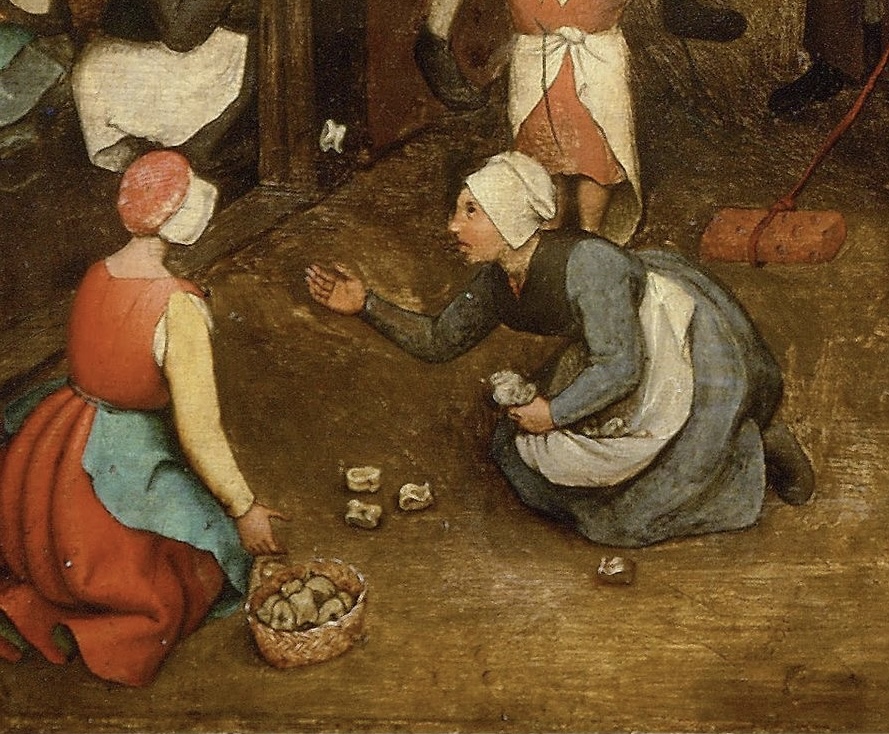
Based on early 16th century illustrations, the kirtle laces up the front and features short sleeves, a 'V' back, and a shaped skirt (constructed with piecing).


It was originally inspired by a page from Catherine de Medici's Book of Hours.


Although less popular later in the century, blue seemed to be a fairly ubiquitous colour in the first decades of the 16th century (and earlier).
Inspired by period images, it was clear that it could be infinitely adapted by swapping out a few accessories.




So first things first: I whip up some new sleeves!
A LOT of sleeves...
(so many that I won't be able to get to all the different combination in this post)

All the sleeves are 3/4 length and are simple tubes which taper to the wrist.
They are lined with various colours of linen (basically whatever I had in my stash)


Okay...
Let the Mix & Match begin!!!
The first look is just the basic kirtle with the addition of a white, un-gathered apron.

The result is a sort of low-rent, early 16th c. Belle...

Adding on....
A lot of the images of female field workers show blue kirtles and red sleeves, so that seemed a fun place to start.


And a leather belt and purse from Karl Robinson - Leatherworker.


Okay, field workers are fun, but it's time to dress things up a bit...


The next iteration is basically the same, but with the white apron swapped out for a beige one...and a broom!

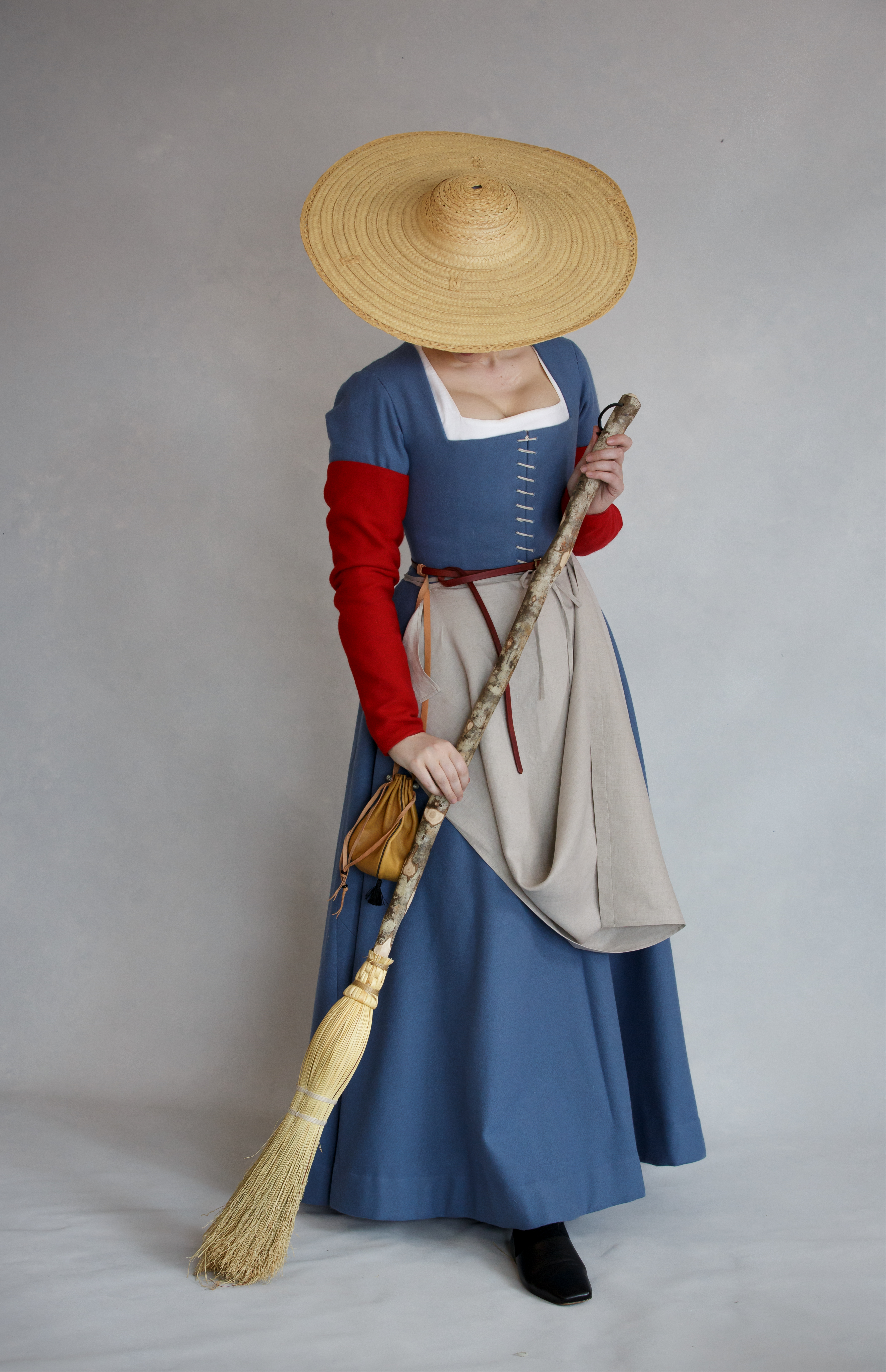
The broom is a one that I picked up at the Renaissance Faire some years ago. It's aggressively rustic in appearance and I love it!


Next up...more props!
This time, a basket and some fake bread and veg that I picked up at a craft store.

Right. These red sleeves are great, but it's getting a bit boring...
Let's do it all again, but with green!


Next big hat is swapped out for a smaller, conical one and the skirt bustled up for work.
(I think this look is just okay...I really needed a partlet or shoulder linen to get closer to the period images.)

Let's start with one of the staples of early Tudor fashion: a black, pointy partlet.


Details of two Brueghel paintings
The partlet is made of black wool and lined in black linen.
(The pattern is self drafted.)


A small pewter hook from The Tudor Tailor is stitched to the point.


This is combined with my black apron.

And a large, white, felted hat from Sally Pointer.


And finally, a pair of white wool sleeves.


I like this look a lot.
I feel like you most often see this style of hat worn with a large, linen shoulder square (as in several Holbein paintings and sketches).
I did make a linen yard square specifically for that purpose....and then forgot to get any photos of it.
Oh, well...
Lastly, one of the inspiration images that kicked off the blue kirtle project to begin with: A Witches' Coven!
(I mean, who doesn't love a good hexing?)
 |
| The Witches' Cove, Follower of Jan Mandijn |

The ensemble uses most of the pieces from the outfit above, but with the white sleeves swapped for light yellow ones.

And of course every self-respecting Witch needs a broom!


And that's it! Blue kirtle Mix & Match is (sort of) complete!
Really, I could have tried even more iterations and combinations but ran out of time.
However, I did take a couple of more costume-y variations....but this post was already getting crazy long, so look for that in a separate upload later this week.
(NOTE: That post can now be found HERE)
***


What an absolutely fabulous post. I'd love to know more about your shoes. :)
ReplyDeleteThanks so much!
DeleteThe shoes are modern flats that I've had for a few years. They are by Vince (a brand that has has actually done a few passably period shapes in the past).
These I think were called "Chandler" and they also had similar suede version called "Finola d'Orsay". They also had a decent round toed flat called "Bogart".
Unfortunately, due to Fast Fashion they become virtually impossible to find once the season they are released in passes...and if you can find them they are STUPID expensive.
I have, however, had decent luck in the past with finding both styles used on Poshmark (though most sellers don't list the specific product names, so try looking under "Vince leather flats").
Hope that helps!
Hello,
ReplyDeleteI'm writing a historical novel set in post-Roman Britain — specifically Caerleon in Gwent, around 480–520 AD — and I've been doing deep research into Late Antique and early medieval dress for both the manuscript and my author social media.
I'm drafting a "before" and "after" Facebook post, featuring the Roman influenced costumes of Britain as compared to the kirtles of later medieval centuries, and came across your photographs. I think they are beautiful! and beautifully demonstrate the point I'm trying to make.
Would you be willing to allow me to share one or two of your photographs in that post, with full credit and a link back to your blog? The post is purely for my author page (Morwenna Montagu, Facebook) and carries no commercial purpose.
I'm happy to share a draft of the post with you beforehand if you'd like to see the context. Either way, thank you for the extraordinary care you put into your work — it's been genuinely useful to someone trying to get the details right.
With thanks,
MM
Hi Morwenna,
DeleteOf course! That sounds like a fantastic project.
The only caveat I’d offer is that I’m more on the side of historical theatricality rather than strict historical accuracy (and definitely out of my depth for anything pre-1500/Early Modern).
So if you are looking for resources for accurate medieval dress in particular, there are many fabulous reenactors who may better fit the brief.
But please help yourself to anything that might be useful!
Best,
J